A Bank Job, a Double Murder, an Old Cavalry Post and a Museum
Reflections on micro and macro history
At 10:30 a.m. on Sunday Dec. 26, 1948, a janitor let himself in the Amarillo American National Bank at 407 Polk St. to clean the lobby and offices ahead of the coming work week. He soon discovered that in a manner of speaking the financial institution had already been “cleaned.”
In Amarillo’s first ever bank break-in, yeggs (to invoke a 1940s tern) cut a hole in the roof, dropped inside, cracked the night depository safe and escaped with $16,000 cash. The haul had the buying power of more than $215,000 today.
Ad published in Amarillo Globe-News, Dec. 31, 1948
Meanwhile, at Saint Anthony’s Hospital on West 6th Street, Bill G. Cox and his wife Betty Jean Wilke Cox and family members awaited the arrival of the couple’s first (and only) child—me. But my father did not get to pass out any cigars that morning. A police reporter for the Amarillo Times, an upstart afternoon tabloid then battling the long-established Globe-News, Bill rushed from the hospital in a snow storm to cover this big news story.
You’d think Dad’s absence would not have gone over well with my family, but everyone took it in stride. That’s because Betty also was a reporter for the Times. And her dad, L.A. Wilke, had spent two decades as a newspaperman before moving on to chamber of commerce management. They understood that news does not always break at convenient times. Though just a footnote, a bit of Amarillo history was made that day.
St. Anthony’s Hospital in the late 1940s
And had it not been for another aspect of Panhandle history, I wouldn’t be writing this. In 1943, a popular doctor and his wife were murdered in their bed at Littlefield. Texas Rangers eventually arrested a career criminal for the double homicide, which appeared to be a murder-for-hire. Following a series of courtroom twists and turns, the defendant faced a third trial in the fall of 1946. The case had been moved on a change of venue to Sweetwater, where Betty Wilke was a young reporter. The Amarillo newspaper dispatched Bill to cover the trial. They met in the courtroom, but by trial’s end had gone from journalistic rivals to lovers. They married in 1947.
Despite their meet-cute romance, the marriage only lasted a few years. They divorced and Betty got full custody of me. She and my grandparents, after a few years in Sweetwater and Abilene, moved to Austin where I grew up.
By the time I’d reached sixth grade, Bill—then managing editor of an Amarillo weekly called The Citizen—had long since remarried. He wrote to ask Mother if I could come to Amarillo on his nickel for a few weeks after school was out. Set for June 1961, it would be a father-son reunion and summer vacation.
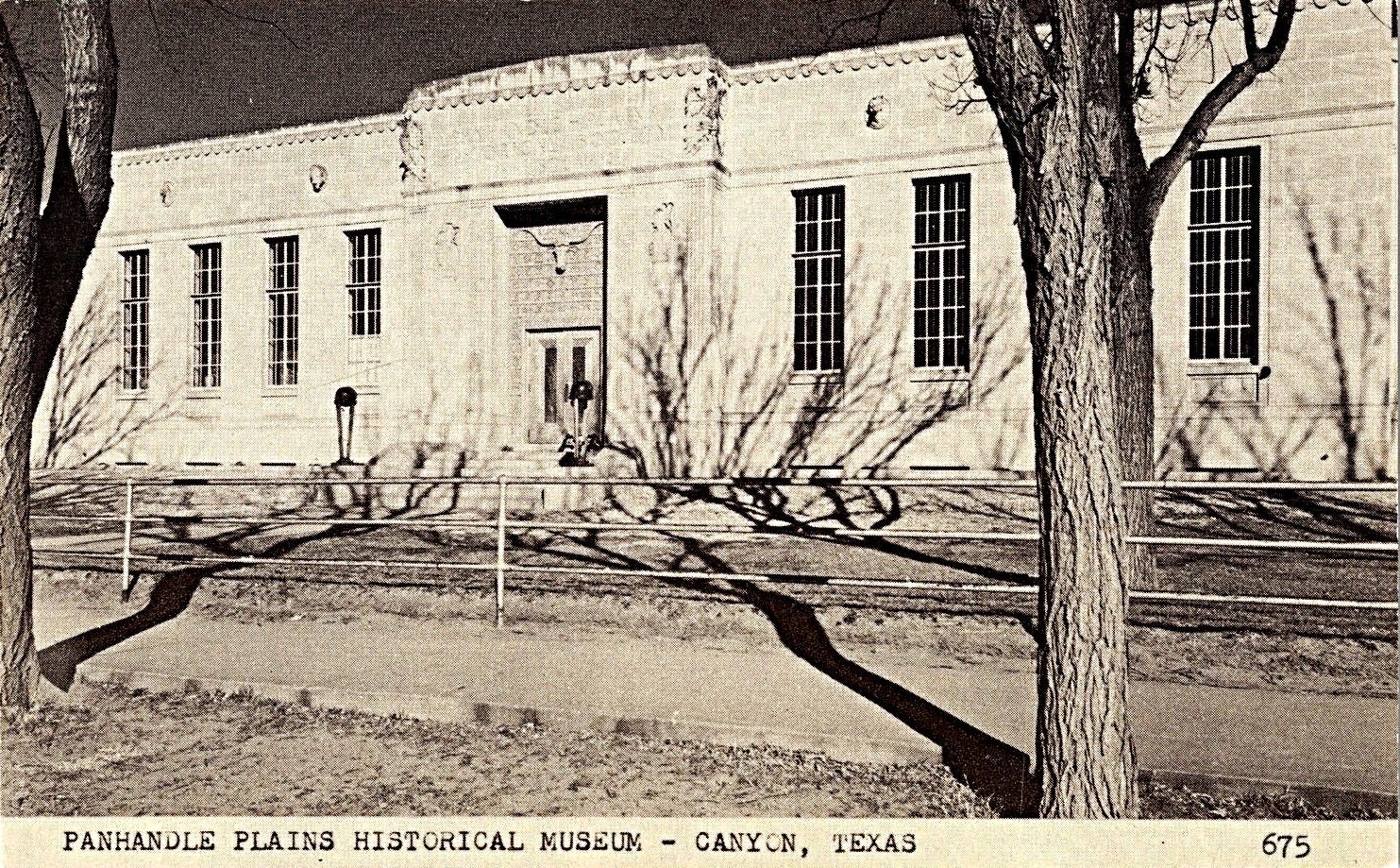
Writing to tell me what he planned for my visit, he enclosed a Chamber of Commerce brochure on things to do in and around Amarillo. One of the attractions touted as a must-see was the Panhandle Plains Historical Museum in Canyon.
While not the first museum I ever visited, the PPHM was certainly the biggest and most impressive I’d seen to that point in my life. Its seemingly endless exhibits transported me to the past and had a definite influence on my life-long interest in history and development as a writer.
The next year, fresh out of 7th grade, I again came to Amarillo for part of the summer. On this trip, I spent more time at the museum.
I was particularly keen on the long-abandoned string of military posts established along the state’s frontier in the mid-19th century. One of those garrisons was old Fort Elliott in Wheeler County.
Wearing a plaid sports jacket and tie and carrying a faux-leather briefcase purchased at the Walgreen’s on Polk Street, I rode a Greyhound bus from downtown to Canyon and made the short walk to the museum. Though only 13, I was welcomed by the archivist and treated like any other researcher
This being decades before archival collections became digitally cataloged, I spent hours going through 3 x 5-inch index cards noting sources on Fort Elliott. I went through the museum’s vertical files, copying original drawings depicting some of the military building on the post and took pages of notes. (Yes, back in Austin most of my fellow soon-to-be eighth graders thought I was a little weird for being so interested in history.)
In addition to the information I gleaned at PPHM, Dad bought me a copy of the Panhandle Plains Historical Review devoted to the Fort Elliott story. Better still, he and his wife took me to Mobeetie to visit the site of the old fort.
The elderly couple who owned the land graciously let us walk around on their historic property. I found empty .45-70 rifle cartridges, several sun-purpled old bottles and assorted other artifacts left behind by the cavalry troopers following the fort’s abandonment in 1890.
As time went by, I continued my family’s journalistic tradition. And my interest in history never waned. As a newspaper reporter-columnist I interviewed and became May-December friends with J. Evetts Haley, the maverick Texas historian, author and cattleman who played such a significant role in the development of the PPHM in the 1920s.
Since my first visit, I’ve been back to the museum many times to check out its latest exhibits or for additional research. Five of my 45 books and numerous articles benefited from material I dug up at the museum. In 2015, I donated my Fort Elliott artifacts to the PPHM. In addition, I gave the museum a collection of World War One folk art made from shell casings that had belonged to my late stepmother’s father.
One of many striking Panhandle Plains Historical Museum exhibits now off-limits to the public
Last summer, back in my hometown for the Western Writers of America convention, I’d been looking forward to yet another visit to the museum. When I learned of its closure, my first reaction was to wish that Haley, author of the best history of the famed XIT Ranch and the definitive biography of the legendary Charles Goodnight, was still around to fight for the future of this venerable museum. Right now, he’d be letting loose more arrows in defense of the PPHM than Quanah Parker did at Adobe Walls.
History is a succession of changes. Some for the worse, some for the better. Some little, some big. As Haley so well understood, a culture can only handle today and tomorrow by understanding yesterday. Texas needs the Panhandle Plains Historical Museum.