J. Frank Dobie and Henry David Thoreau
Both engaged in civil disobedience
New England transcendentalist Henry David Thoreau went to jail in the summer of 1846 for refusing to pay a $1.50 poll tax. Ninety years later, in a part of the United States Thoreau knew about but never saw, another man with a three-part name went to jail for $2.
Thoreau’s famous essay, “Civil Disobedience,” surely was in the back of J. Frank Dobie’s mind in the spring of 1936, the year of Texas’ centennial of statehood, when the noted educator-writer-folklorist vowed to go to jail rather than pay a couple of City of Austin parking tickets.
As Thoreau had written, “Unjust laws exist: shall we be content to obey them . or shall we transgress them at once?”
Dobie, like Thoreau, chose transgression.
The Texas version of Thoreau’s “Civil Disobedience” began earlier in 1936, when Dobie, then a professor at the University of Texas, got two tickets for parking in a one-hour zone near the UT campus. Thoreau-like, he ignored a Municipal Court summons to explain his position or pay his fines.
While Thoreau’s thesis was that “government is best which governs least” Dobie’s stance was that government was being unnecessarily arbitrary in ticketing him for parking in a one-hour zone when plenty of other parking spaces were unoccupied at the very time he got his ticket. (This, of course, was in an era when a person could reasonably expect to find a parking space near UT. )
The matter came to a head when Dobie got a third ticket, this time for running a stop sign. Here, he could see practicality behind the law and intended to pay that $3 fine.
This all occurred long before law enforcement records were computerized. (We can only imagine what Thoreau would have thought of today’s Big Brother-like information systems.) In the 1930s, unpaid tickets were noted on index cards, and Dobie’s delinquent parking tickets came to light.
When reminded of his unpaid citations, Dobie wrote Municipal Court judge Jesse Maxwell and agreed to pay the $3 stop sign fine, but added, “If I am fined for parking I will not pay the fine.”
To this, the judge was reported to have replied: “The hell he won’t!”
Somebody leaked Dobie’s letter to the press, making for a page one story. The judge’s reply also was reported, setting the stage for a Texas-style civil disobedience showdown.
Press photographer flashbulbs popping around him, Dobie appeared in court, was found guilty and remanded to police custody. Assuming he’d go to jail to “lay out” his fine, Dobie had arrived with a book to read and an ample supply of tobacco for his pipe. But unlike Thoreau, Dobie did not go behind bars.
Austin Police Chief “Boss” Thorp kept him at the police station for the day, allowing him to “work out” his fine by typing traffic reports and lecturing police officers on Texas history so that they could better serve the tourists expected in Austin for the Centennial events.
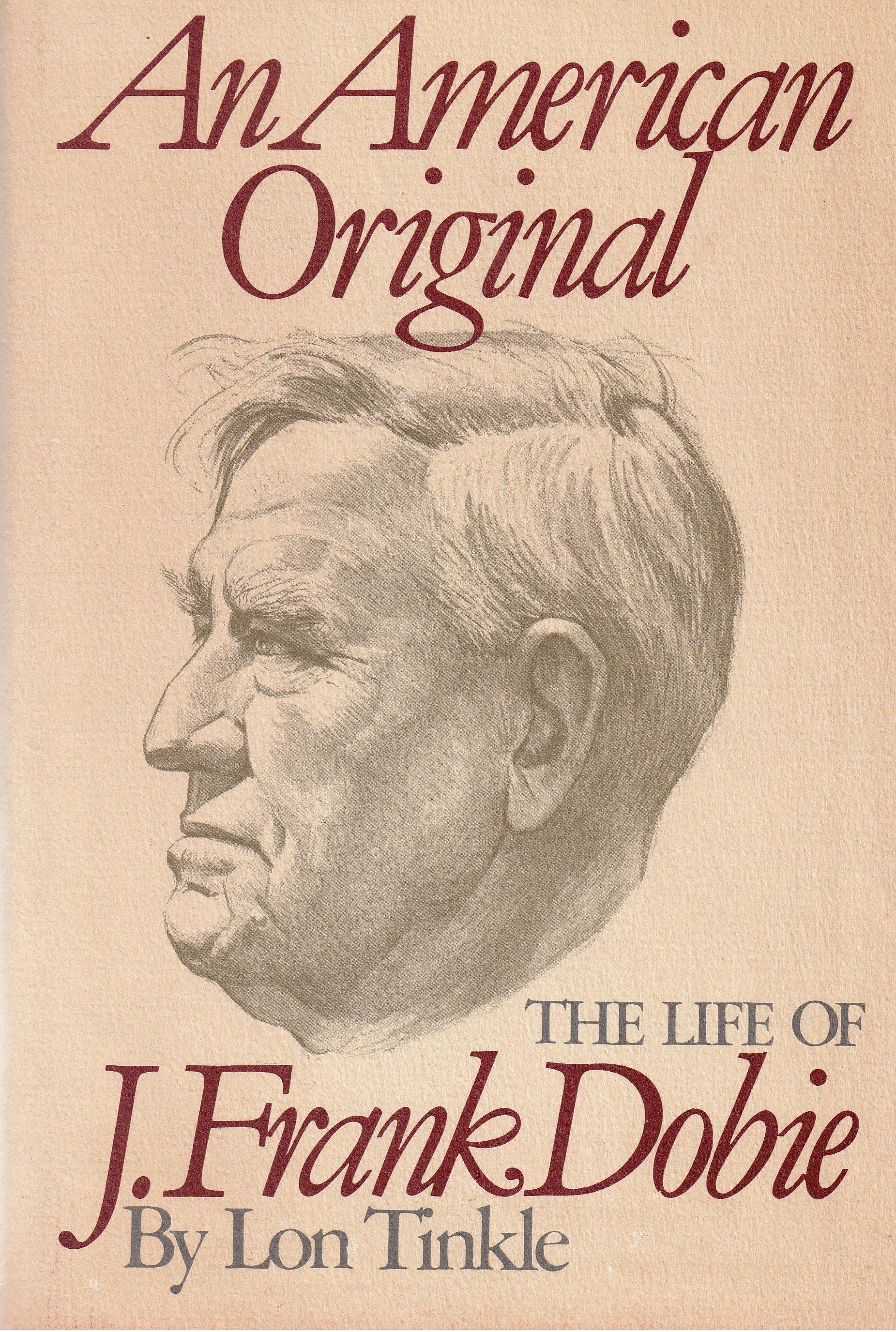
In recounting Dobie’s Civil Disobedience in his biography of the colorful Texan, author Lon Tinkle wrote that Dobie, “feeling himself a second Thoreau, was reveling at having his day in jail.”
Though contemporary newspaper stories on the incident did not draw the “Civil Disobedience” parallel, there is no doubt that Dobie was quite familiar with the works of the eccentric essayist from Concord.
Years later, in an essay he wrote on Texas naturalist Roy Bedichek (who was much closer than Dobie to being Texas’ Thoreau), Dobie pointed out that Bedichek was an ardent fan of Thoreau.
Dobie called the 19th century New Englander “acid, with the wild taste, a rebel.” Bedichek, Dobie continued, “gloried in the influence that Thoreau’s ‘Civil Disobedience’ is still having over the world .”
Dobie’s parking ticket caper is only a footnote in the life of the man, but ample proof that the spirit of Thoreau’s “Civil Disobedience” survived well into the 20th century and even made it to Texas.