Dear Subscribers:
Remember letters?
You wrote ‘em by hand or typed them, usually folded them in thirds, placed your missive into a No. 10 envelope, addressed it, sealed it, and affixed a postage stamp you had to lick. Then you dropped it in a mailbox and waited for an answer you hoped would come in a few days or weeks.
Over the years, I’ve written several reams worth of letters for reasons ranging from expressions of undying love to pitching stories or books to editors to catching up with friends and relatives.
Alas, email—part of our lives now since the mid-to-late 1990s—virtually killed off the first-class letter. Texting further eroded what the original form of digital messaging had not already ravaged.
I’ve read that old-fashioned style postal correspondence, especially thank you notes and other short jottings have seen a nostalgia-born uptick of late, but when was the last time you got a letter from someone via your old-fashioned outside mailbox?
A 2021 CBS News poll found that 37 percent of American adults had not sent or received a personal letter in five-plus years. The study also showed that 15 percent of all adults had never written or sent a traditional letter. Among those under 30 years old, 90 percent had never done such a thing.
One of my wife’s cousins told her a while back that her college graduate son, tasked with sending a written thank you note via snail mail, had to ask her how to do it!
My late grandfather L.A. Wilke, a veteran newspaperman turned PR practicioner and freelance writer, occasionally sent me letters after I’d I moved from Austin to San Angelo in the early summer of 1967 for a reporting job at the San Angelo Standard-Times.
His letters were usually to the point, often offering unsolicited wisdom that began with, “Now if you’ll take a fool’s advice.…” Other letters, written like the city editor he used to be, offered tips or story ideas. Sometimes he’d answer a question from me with a recollection from his journalistic or hunting and fishing experience. Whatever the subject, his letters were always interesting.
Grandmother’s letters were more traditional and sometimes funny. Often, she enclosed a newspaper clipping about something for my edification.
For those who hopefully still like the idea of getting an old-fashioned letter, even if delivered electronically, paid Texas Magazine subscribers will now be receiving “The Occasional Letter” about whatever happens to come to mind that has at least some connection to Texas history, culture or current events.
Now how about opening the envelope?
Coffee with a Texas D-Day Hero
Dear Prospective Paid Subscriber (and those of you who already subscribe):
Eighty-two years ago—June 6, 1944—the Allies invaded Nazi-held France, the beginning of the end of World War Two. Some 150,000 American, British and Canadian troops splashed ashore across a 50-mile stretch of beach in Normandy, France to free Europe. Combined casualties that day exceeded 10,000, with a little over 40 percent of that number killed in action.
Dubbed Operation Overload, the invasion turned the tide of the war. One of the thousands of men who participated in the largest amphibious assault in military history was a 34-year-old West Texan (and Aggie), Lt. Col. Earl Rudder of the U.S. Army Rangers.
On June 5, 1969, the eve of the 25th anniversary of D-Day, Texas A&M Univeresity President and Brig. Gen. Earl Rudder (later promoted to major general) graciously agreed to meet me one-on-one in the coffee shop of San Angelo’s El Patio Motel. Rudder had come to town earlier that day to promote a new A&M agricultural program.
A not quite 21-year-old reporter for the San Angelo Standard-Times, I’d been assigned to interview the general for an article that would run the next morning to coincide with the invasion anniversary.
Rudder was born in Eden in 1910, only 42 miles east of Angelo (as locals refer to it), and grew up in Brady. In the Corps of Cadets at A&M, he graduated in 1932 with an Army Reserve lieutenant’s commission. This being during the Depression, it took him a year to find a job. A degreed engineer, he went to work as a football coach at Brady High School. He was coaching at Tarleton State when called to active duty in the 2nd Infantry in the summer of 1941. Two days later he got promoted to captain.
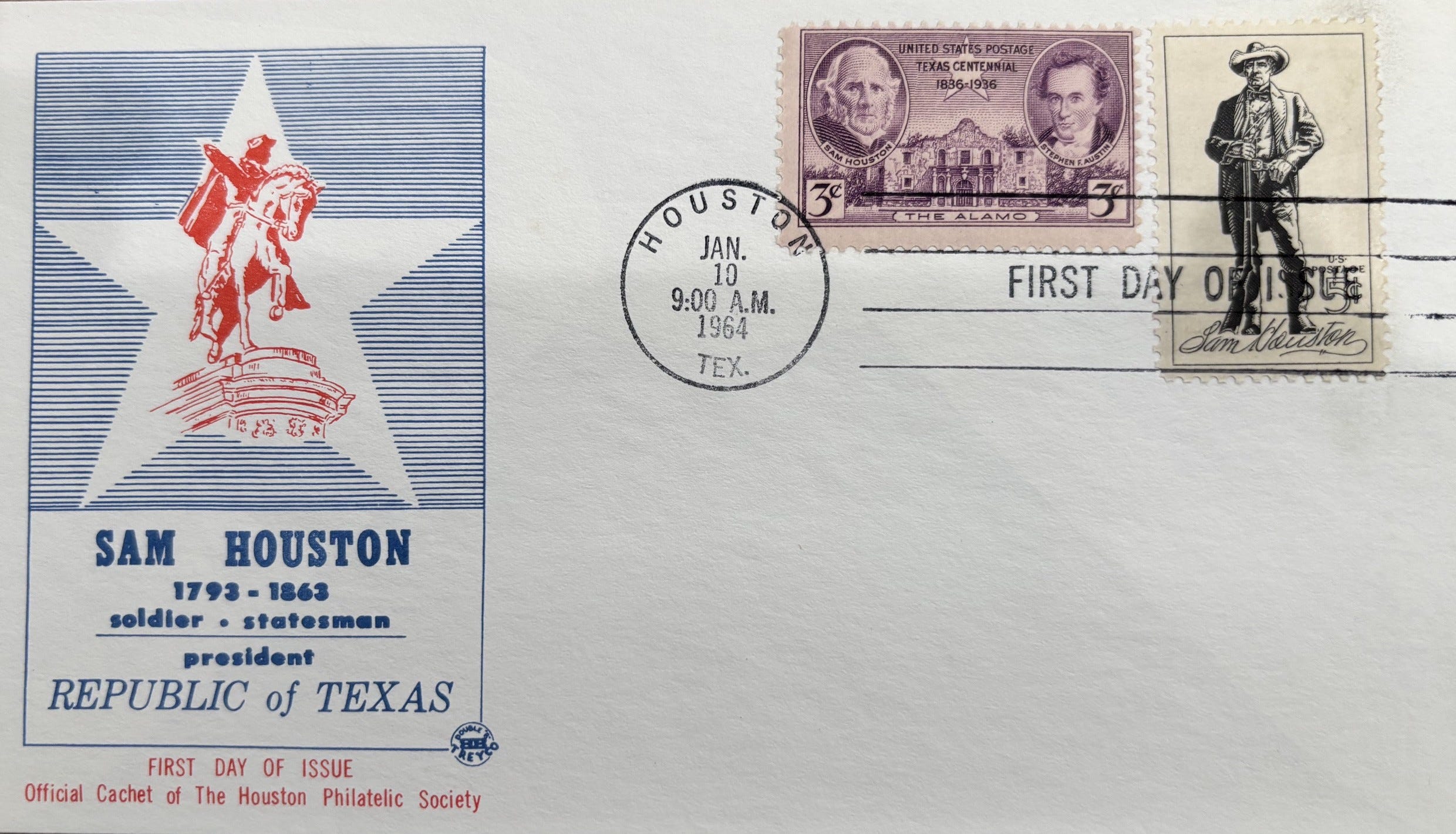
Just as my grandmother used to do when postage was five cents, “enclosed” with this letter is a “clipping” of the newspaper article I wrote that long ago summer night:
A&M President/ Rudder Recalls D-Day
By Mike Cox
Standard-Times Staff Writer
Last night, Earl Rudder sat calmly drinking a cup of coffee in San Angelo.
“Last night,” 25 years ago Rudder sat in a landing craft plowing its way through the waters of history toward D-Day.
Instead of drinking coffee, Rudder was wondering if he would be alive the next day.
Dawn today was the 25th anniversary of the Normandy—the Allied thrust that broke the backbone of the axis powers on June 6, 1944.
Rudder, placidly stirring his coffee last night in a local restaurant after a busy day of A&M University activities in San Angelo, was a long way from where he had been a quarter of a century earlier.
“About this time,” he said, looking at his watch, “we had the boats loaded and were setting sail for the beach. We hit it at dawn, 30 minutes late.”
The Eden native, who moved to Brady at an early age, had been picked especially to lead the assault on a 100-foot cliff—at the top of which was a vitally important artillery location, and German troops to defend it.
Rudder led a group of specially picked and trained men known as Rudder’s Rangers at the cliff of Pointe du Hoc, where the Germans were soundly entrenched.
“We had about 225 men,” Rudder said. “When it was over, there were only between 60 and 70 left. We had better than 50 percent casualties.”
Rudder and his men had trained strenuously for the assault since January 15 of that year. He and his men practiced scaling cliffs in the southern portion of England which were very similar to the one which would be the objective on D-Day.
The A&M head was wounded twice within 30 minutes during the deadly climb up the cliffs, tall as a nine-story building.
Rudder stayed [with his command] three days. The Rangers were not the first to hit the beach on that bloody morning 25 years ago today, but this was the first—and only—assault force to reach this particular area, located on the southern end of famed Omaha beach.
Rudder said the artillery position was the number one target of the invasion force.
“Those guns could cover both beaches (Utah and Omaha) as well as the support ships at sea within a range of about 10 miles,” Rudder said. “The guns had to go, or the invasion might not have.”
Just last March, Rudder, a retired general, returned to the beach in the company of a group of British television filmers preparing a documentary on D-Day.
“You get some sobering memories when you go back to a place like that,” Rudder said. “When I go back to a place like that (he’s been there three times since the war: on the 10th and 20th anniversaries and last March) I never hesitate to be most thankful that I’m still alive.”
P.S. Less than 10 months after I interviewed him, microscopic organisms did what German bullets failed to do. On March 23, 1970, Gen. Rudder died at 59 in a Houston hospital of complications brought on by a kidney infection. His legacy endures.
If you enjoyed this “Occasional Letter,” I hope you’ll become a paid subscriber. I will be continuing to add more bonus material, in addition to “mailing” more “Occasional Letters.”


