
"Well, I'll Be Darned..."
A Depression-era Federal Patrol Boat Named for a Texas Ranger?

Welcome to “Well, I’ll Be Darned!” another Texas Magazine feature that will be available only for you erudite (and much appreciated) paid subscribers. This first offering is on the house in the humble hope that it’ll inspire you to pony up the heady sum of $8 a month or $80 a year for access to all content.
Though once heard more often than today, “Well, I’ll Be Darned!” is still universally understood among English speakers to be the same as saying, “Wow, I didn’t know that!” or “News to me!” or some other way of expressing surprise at something new.
For fellow word lovers, “Well, I’ll be darned!” is known among linguists as a “minced oath.” In other words, it’s a less jarring way of saying, “Well, I’ll be damned!” Or, in its simpliest form, “I b dam…”
The more polite phrase can be heard across the U.S., though in popular culture it’s often used to make readers or viewers get that the speaker is a shore nuff Texan or Southerner. More truly Texas ways to react to new information are far less common, if not archaic.
For instance, my late grandmother, born in San Angelo, Texas in 1898, was apt to say, “Well, I’ll be Johnny Brown!” if encountering a bit of surprising information. That’s a Civil War era expression she picked up from her mother, who grew up in Mississippi right after the war. Two other vintage Texas terms in no need of mincing are, “Well, I declare!” or “Well, butter my biscuit!” I do recall my grandmother invoking an occasional “Well, I declare!” , but we buttered our own biscuits, thank you.
“Well, I’ll Be Darned!” will be sent to paid readers whenever I run across something Texas-related (or something universal I trick up into being Texas-related) that causes me—and hopefully you—to utter, “Well, I’ll be darned!’”
“Well, I’ll Be Darned!”
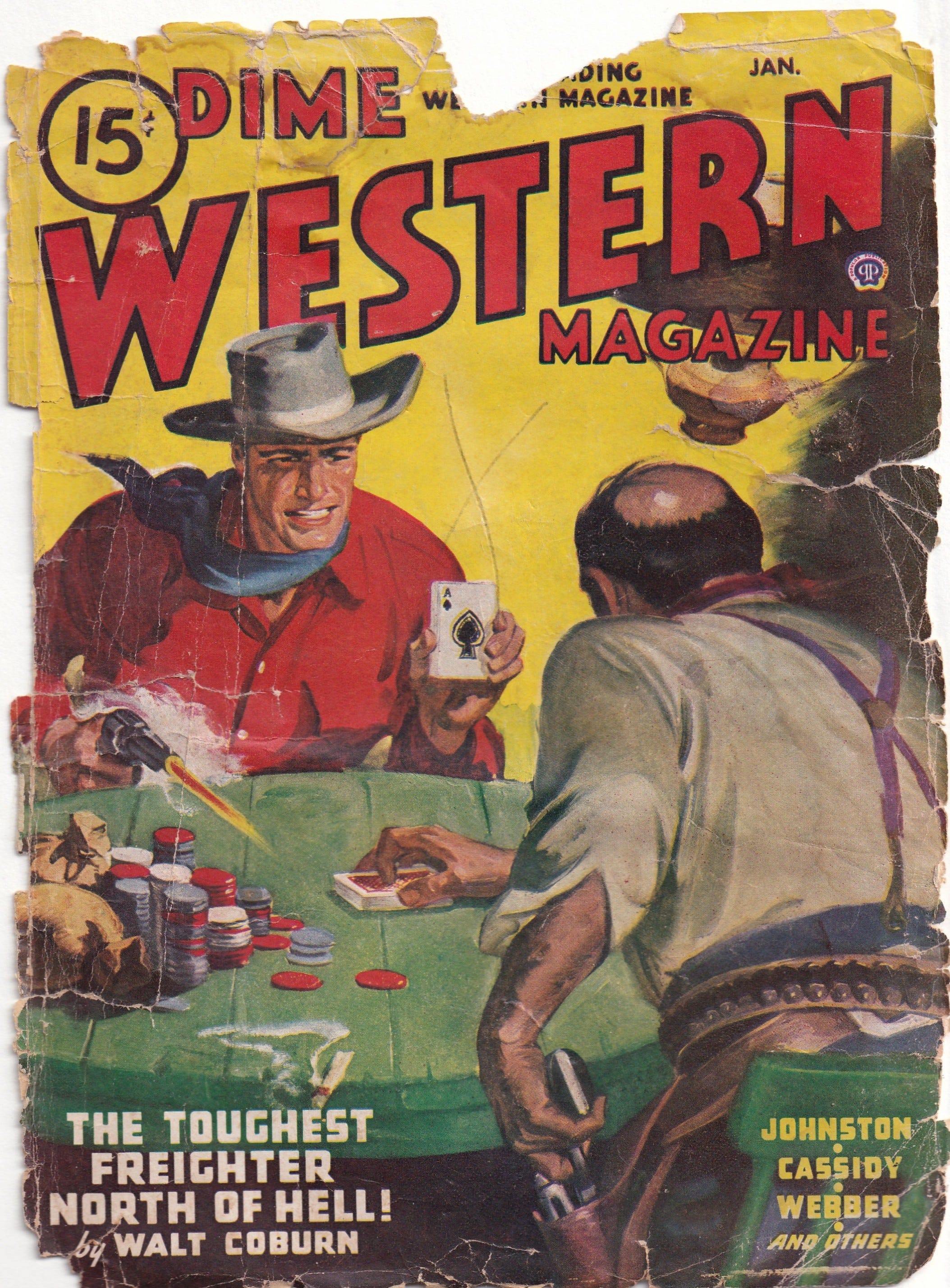
Being a relentless hunter of vintage paper, from Texas-related ephemera to books, I recently acquired a box of 1940s pulp Western fiction magazines and started going through them looking for something to find. When I perused the table of contents for the January 1947 issue of Dime Western Magazine (check the actual price above), I saw an article listed in the nonfiction section titled “Frontiersmen Who Made History.” Clearly a standing feature.
Curious which frontiersman the editors had chosen, I turned to page 53. Here’s that page:
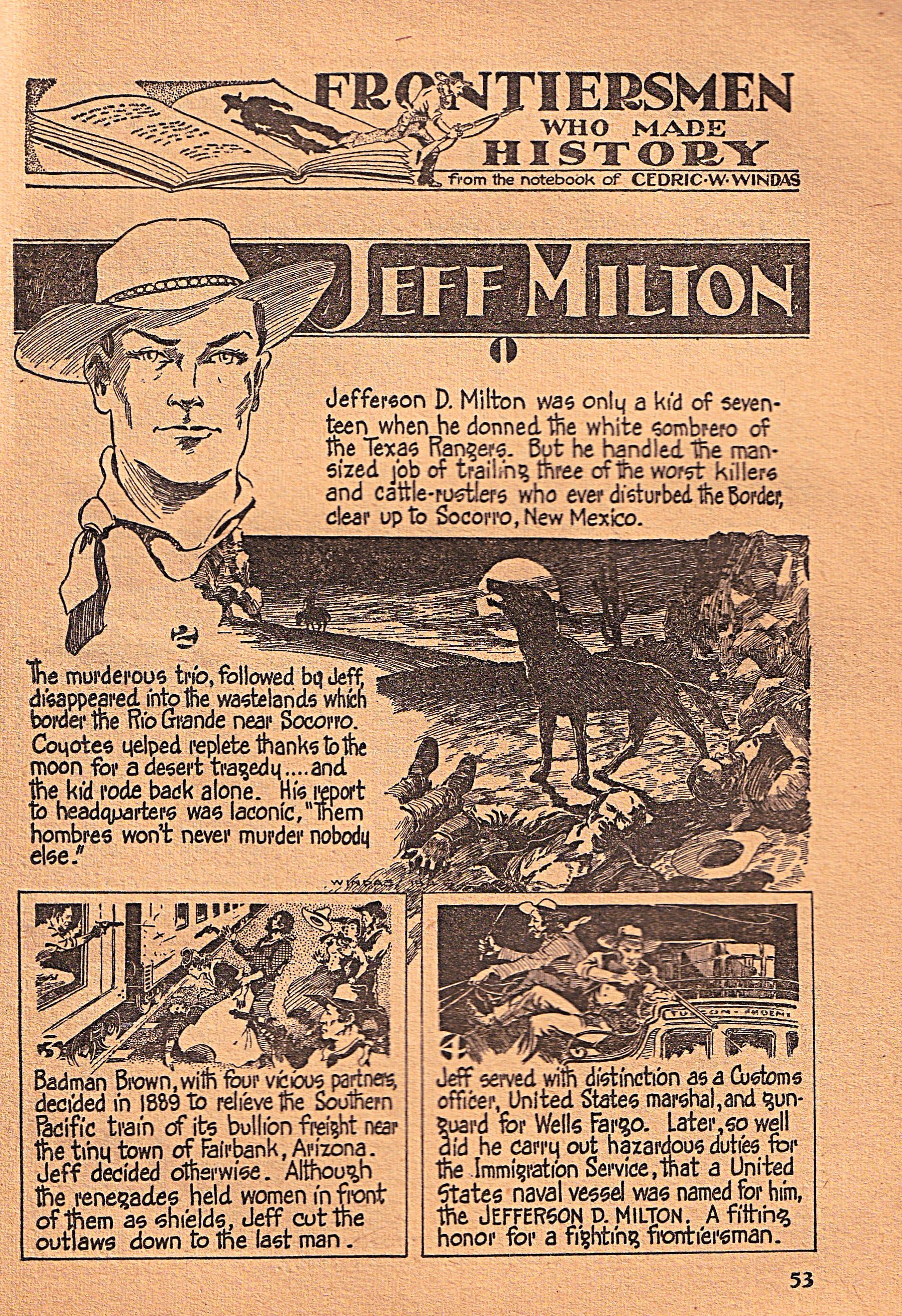
Having written a fair-to-middling stack of books on the history of the Texas Rangers, I’m familiar with Jeff Milton: One of the toughest “law dogs” (to use an old pulp Western term) who ever strapped on a six-shooter, levered a Winchester and straddled a horse in the Lone Star State. Indeed, the subtitle of historian J. Evetts Haley’s 1948 biography of Milton is “A Good Man with a Gun.”
Not mentioned in the little-known cartoon spread is one of the best examples of brevity in an offense report I’ve ever had the pleasure of reading. In a telegram to headquarters, Milton employed only six words—seven if you count his first name—to advise the chain of command of his current situation: “Send two coffins and a doctor. Jeff”
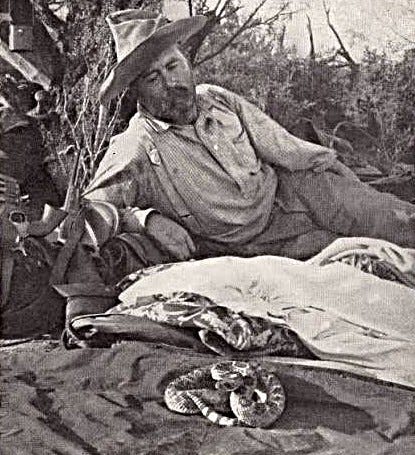
What caused me to invoke an “I’ll be darned!,” was the last sentence of this one-page, acid-yellowed infographic:
“Later, so well did he carry out hazardous duties for the Immigration Service, that a United States naval vessel was named for him, the Jefferson D. Milton. A fitting honor for a fighting frontiersman.”
I knew he had worked for U.S. Customs (then called the Immigration Service) following his Ranger career, but as much as I thought I knew about Milton, I had no idea that the government had named a ship in his honor. Or for that matter, that any early day landlubber Ranger’s handle had ever graced the stern of a seagoing craft.
Not too surprisingly, the “I’ll be darned!”-triggering sentence was not 100 percent watertight. The “ship” was actually a boat, and it didn’t belong to the U..S. Navy. But on Aug. 15, 1936, officials with the U.S. Immigration Service Border Patrol, as it was then known, christened a 48-foot, diesel-powered harbor boat as the Jefferson D. Milton. It would be plying the waters of San Francisco Bay, carrying detainees, newly released immigrants and federal agents to and from the Angel Island Immigration Station. That facility, closed in 1940, has been described as the “Ellis Island of the West.”
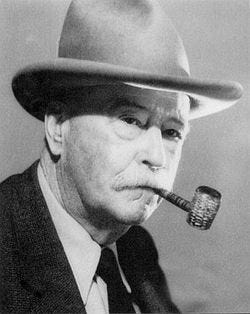
Milton, then 75 and living in Tucson, had been invited to attend the West Coast ceremonies, but he decided to stay at home on decidedly dry land. Milton died in 1947, his ashes scattered at the Old Tucson Movie Studio—an Old West-style town later destroyed by fire.What became of his namesake watercraft has not been determined.
Do you have a favorite way to verbalize your surprise? Feel free to comment.